 UAE Trusted

Social Media Marketing for Trade Finance Companies in Dubai and the UAE: A Practical Guide
Discover how trade finance companies in Dubai and the UAE can leverage social media to build trust, generate high-quality B2B leads, and stay compliant. This practical guide covers audience targeting, platform strategies, content creation for LCs and guarantees, and UAE financial advertising regulations.

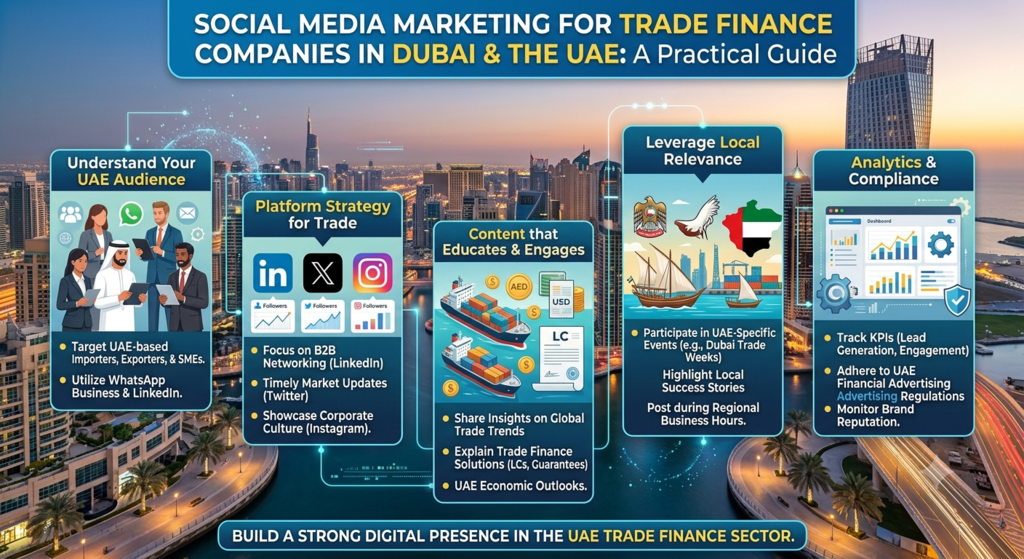
Trade finance is a relationship business. An importer in Jebel Ali, an exporter in Sharjah, or a free zone trader in Dubai rarely chooses a financing partner on impulse. They research, compare, ask peers, and look for signs that a provider understands their trade corridor and their paperwork.
Increasingly, that research starts online. Social media gives trade finance providers a way to show expertise before the first conversation happens. This guide explains how to use it well in the Dubai and UAE market, what to post, where to post it, and how to stay on the right side of financial communication standards.
Why Social Media Matters for Trade Finance Providers
Trade finance is a specialist subject, and many business owners are still learning the basics. Questions such as “What is a letter of credit?” or “How does invoice financing work?” are common, and the provider that answers them clearly is often the one remembered later.
Social media supports trade finance marketing in four ways:
- Visibility. Decision-makers, finance managers, and procurement teams spend time on professional platforms and can discover your brand there.
- Credibility. Consistent, accurate educational content shows depth of knowledge without a hard sell.
- Relationships. Comments, messages, and shared connections open conversations that can lead to meetings.
- Search support. Active profiles and shared articles help your brand appear when prospects look for your name.
Know Your Audience First
Before choosing platforms or topics, define who you want to reach. In the UAE, trade finance audiences often include:
- SME owners and founders who import, export, or re-export goods
- Finance managers and CFOs responsible for cash flow and banking relationships
- Procurement and supply chain leads who work with overseas suppliers
- Free zone businesses with international trading activity
- Referral partners such as accountants, corporate service providers, and logistics companies
Choosing the Right Platforms
You do not need to be everywhere. Choose the platforms where your audience is already active and where you can post consistently.
For B2B finance, LinkedIn is usually the strongest starting point. Use it for thought leadership, company updates, educational posts, and direct professional outreach. Both the company page and the profiles of your relationship managers and specialists matter, because people tend to trust individuals more than logos.
Instagram and Facebook
These work well for brand personality, event highlights, short educational explainers, and reaching small business owners. Visual formats such as carousels and short videos can make technical topics easier to follow.
YouTube
Short explainers, webinar recordings, and panel discussions suit YouTube well. A clear video on “how a letter of credit works” can keep attracting viewers long after it is published.
X (formerly Twitter)
Useful for sharing quick updates, commentary on trade developments, and engaging with industry conversations.
WhatsApp and Messaging
Many UAE business conversations move to messaging. Rather than broadcasting, use it to respond to enquiries from people who have already contacted you.
Content Ideas That Build Trust
The best social content for trade finance explains, clarifies, and helps. Here are formats that work.
Explainer posts. Break down one concept at a time: letters of credit, documentary collections, bank guarantees, supply chain finance, or export credit insurance.
Step-by-step visuals. A simple graphic showing how a trade finance transaction flows from agreement to payment is easy to save and share.
Document checklists. Posts on the key trade documents, such as commercial invoices, packing lists, bills of lading, and certificates of origin, answer practical questions and are often saved by readers.
Common mistakes. “Five document errors that delay shipments” style content is useful and naturally engaging.
Myth-busting. Address misunderstandings, such as the idea that trade finance is only for large corporations.
Team spotlights. Introduce your specialists and explain what they do. This puts a human face on a technical service.
Event and webinar content. Share takeaways from trade forums, free zone events, and industry sessions you attend or host.
Client-focused stories. With written permission and care for confidentiality, share how a business approached a trading challenge. Keep details general unless the client agrees to be named.
FAQ series. Turn the questions prospects ask most often into a recurring post series.
Building a Simple Content Plan
Consistency matters more than volume. A manageable approach looks like this:
- Set two or three content themes. For example: trade finance basics, documentation and process, and market insight.
- Choose a realistic rhythm. A few quality posts each week beat daily posts that cannot be sustained.
- Mix formats. Alternate between text posts, graphics, carousels, and short video.
- Repurpose. Turn one blog article into several posts, a short video, and a carousel.
- Review regularly. Check which topics earn comments, saves, and enquiries, then do more of what works.
Reaching the UAE Audience Effectively
Use clear, simple language. Many readers are experts in their own trade, not in banking. Avoid unexplained jargon.
Consider bilingual content. The UAE business community is multilingual. Arabic and English content can broaden reach, and other languages may suit specific trade corridors.
Reflect the local context. Mention relevant features such as free zones, ports, and regional trade routes so content feels grounded in the market.
Be culturally aware. Keep tone respectful and professional, and be mindful of local customs and public holidays when scheduling posts.
Make it easy to take the next step. Include a clear call to action, such as booking a consultation, downloading a checklist, or contacting a specialist.
Paid Social Advertising: A Careful Approach
Paid campaigns can extend your reach, especially on professional platforms where targeting by job role, industry, or company type is available. A few principles help:
- Promote useful resources, such as guides, webinars, or checklists, rather than pushing products immediately.
- Match the message to the audience. A campaign for exporters should differ from one for procurement managers.
- Test small before scaling, and track enquiry quality as well as clicks.
- Review all ads to ensure claims are accurate and not misleading.
Compliance and Responsible Communication
Financial services marketing is a sensitive area. Content about financial products should be accurate, balanced, and not misleading. In the UAE, financial promotions and advertising may be subject to requirements from regulators and authorities, depending on the type of provider and where it is licensed, whether on the mainland or in a financial free zone. Media and advertising content standards also apply to online communication.
Good practice includes:
- Having marketing content reviewed by your compliance or legal team before publication
- Avoiding guarantees of approval, pricing, or outcomes unless they are formally confirmed
- Including appropriate disclaimers where required
- Protecting client confidentiality and obtaining permission before sharing any client information
- Keeping a record of approved content and campaigns
Because requirements differ by licence and activity, confirm what applies to your organisation with your compliance team or the relevant regulator.
Measuring What Matters
Likes are pleasant, but business results come from deeper signals. Track:
- Engagement quality: comments, saves, shares, and thoughtful replies
- Audience growth: especially among your target roles and sectors
- Website traffic from social platforms: and which pages visitors read
- Enquiries and conversations: including how many began on social media
- Content performance: which topics and formats consistently resonate
Common Mistakes to Avoid
- Posting only promotions. A feed full of sales messages quickly loses attention.
- Being too technical. Content that only specialists understand limits your reach.
- Inconsistent posting. Long gaps weaken momentum and trust.
- Ignoring comments and messages. Prompt, helpful replies are part of the service.
- Copying competitors. Share your own insight and voice.
- Skipping compliance review. Even a well-meant post can cause problems if it is inaccurate.
- Having no clear next step. Readers should know how to continue the conversation.
Final Thoughts
Social media will not replace the relationship-driven nature of trade finance, but it can start those relationships on the right footing. In a market as active and international as Dubai and the wider UAE, the providers who explain clearly, communicate responsibly, and show up consistently tend to earn lasting trust.
Start small: pick one or two platforms, choose a few themes, and publish helpful content regularly. Over time, your profile becomes a library of expertise that prospects can explore before they ever pick up the phone.
Frequently Asked Questions
1. Why should a trade finance company use social media marketing?
Social media helps a company share expertise, build credibility, and stay visible to businesses researching financing options. It supports relationships that often lead to direct conversations.
2. Which social media platform is best for trade finance marketing in the UAE?
LinkedIn is commonly the main platform for B2B finance, since it reaches business decision-makers. Other platforms, such as Instagram, YouTube, and X, can support specific goals like awareness and education.
3. What type of content works best for trade finance?
Educational content tends to work well, such as explainers on financing instruments, document checklists, process visuals, and answers to common questions.
4. How often should a company post on social media?
There is no single rule. A consistent schedule you can maintain with good quality is more effective than frequent but rushed posting.
5. Should content be in Arabic, English, or both?
It depends on your audience. Many UAE businesses use English as the main business language, and adding Arabic can broaden reach and show cultural awareness. Other languages may suit specific trading communities.
6. Can paid advertising help generate trade finance enquiries?
Yes, when used thoughtfully. Promoting helpful resources to well-defined audiences, then reviewing the quality of enquiries, is generally better than aggressive product promotion.
7. Are there rules for advertising financial services online in the UAE?
Financial promotions and online advertising may be subject to regulatory and content requirements, depending on the provider’s licence and location. Companies should check with their compliance team or the relevant regulator.
8. Can we share client success stories on social media?
Yes, with the client’s clear permission and with care for confidentiality. Keep the details general unless the client agrees to be named.
9. How can we measure the success of social media marketing?
Look at engagement quality, audience growth among target roles, website visits from social platforms, and the number and quality of enquiries, rather than likes alone.
10. Do small trade finance providers or advisors need a social media presence?
It can help any provider build visibility and trust. Even a simple, consistent presence on one platform can support business development.
11. How can social media content support our website and blog?
Social posts can introduce key ideas and link readers to detailed articles, guides, or resources on your website, while blog content can be repurposed into posts and short videos.
12. What is the most common mistake in financial social media marketing?
Focusing only on promotion. Content that educates and answers real questions usually builds more trust than repeated sales messages.
Disclaimer
This article is for general information and educational purposes only and does not constitute legal, regulatory, financial, or marketing advice. Advertising and financial promotion requirements in the UAE may vary depending on licence type, jurisdiction, and the nature of the services offered, and they can change over time. Please consult your compliance team, a UAE-licensed professional, or the relevant regulatory authority before publishing financial content or launching campaigns. Mention of any platform or organisation is for illustration only and does not imply endorsement